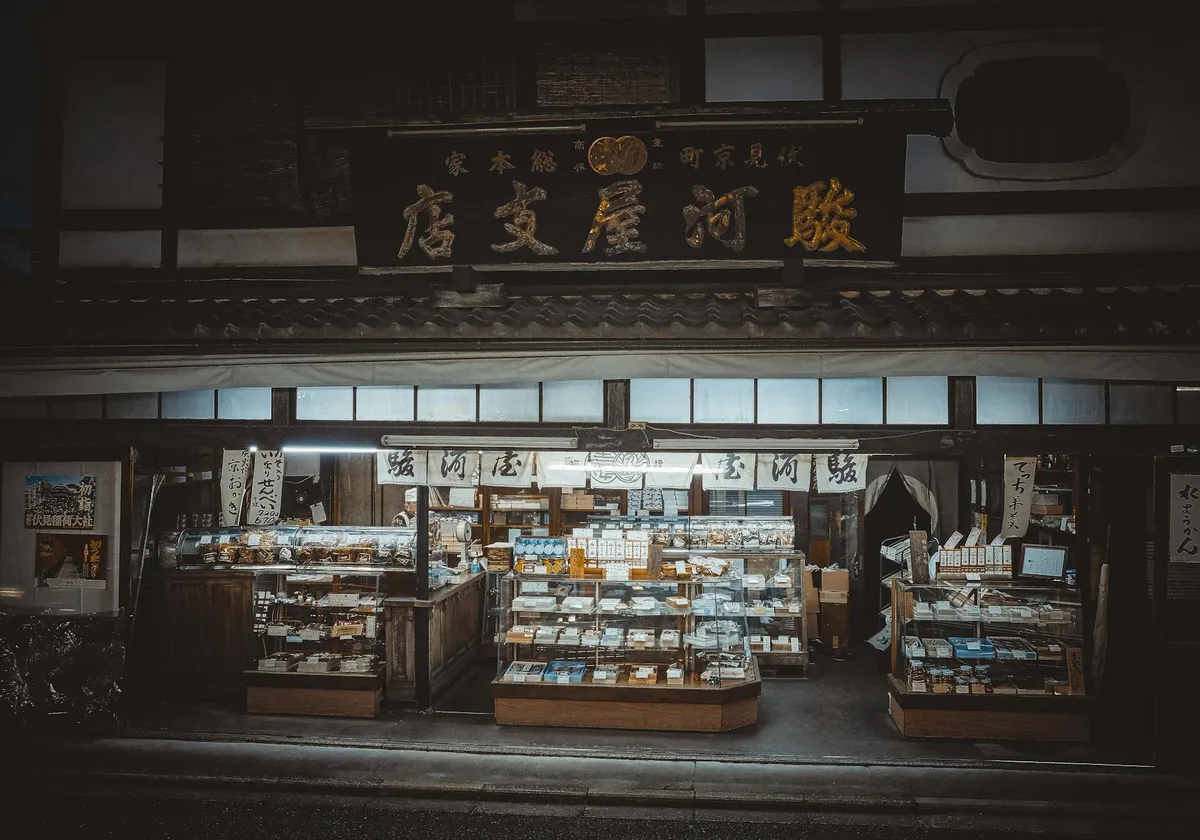
A specialty retailer operating continuously in the same family since 1923 represents an unusual case in modern commerce. The vast majority of firms — including the vast majority of family firms — do not survive a century. The cases that do, examined carefully, reveal patterns that warrant attention from contemporary owner-operators considering the long-term durability of their own enterprises.
The case examined below is composite, reflecting common patterns across several century-long family firms whose histories have been documented in business-school case archives. The patterns are sufficiently consistent that the synthesis preserves the analytical value of the individual cases.
Founding context (1920s)
The firm was founded in the early 1920s by a first-generation immigrant entrepreneur who established a single retail location specialising in imported textiles. The founding business model was not particularly novel for its period; what distinguished the firm at founding was the founder's emphasis on quality consistency and customer relationships, both unusual at the price point at which the firm operated.
Within five years, the firm had established a reputation that supported steady growth without aggressive marketing. The founder explicitly declined opportunities to expand rapidly, citing concerns about quality dilution and his ability to personally supervise operations.
First generation transition (1950s)
The transition from founder to second generation occurred in the early 1950s. The second-generation operator — the founder's son — had worked in the business since adolescence and assumed leadership in his late thirties.
The transition coincided with substantial post-war changes in retail commerce, including the rise of suburbanisation, automotive culture, and broader consumer prosperity. The second-generation operator made several consequential decisions during this period.
He expanded modestly, opening two additional locations in suburban areas while maintaining the original urban store. He broadened the product mix to include adjacent categories — initially through opportunistic acquisitions of small competitors, later through curated expansions of in-house assortments. He invested in staff training programmes that became unusual for the period.
Notably, the second-generation operator declined opportunities to expand to national scale, despite repeated approaches from larger acquirers. The decision was articulated in the firm's archives as a deliberate choice to preserve operational control rather than maximise enterprise value.
Second generation transition (1980s)
The transition to the third generation in the early 1980s occurred under more difficult conditions. The era was characterised by rising competition from large-format specialty retailers, evolving consumer expectations around price and selection, and broader pressures on independent specialty retail.
The third-generation operator — a granddaughter of the founder — assumed leadership during this period and made several non-obvious decisions that, in retrospect, proved consequential.
She narrowed rather than broadened the firm's product focus, exiting categories where competitive pressures had eroded margin sustainability. She invested heavily in staff retention, including unusual employee benefits for the era and explicit career-development programmes. She declined opportunities for franchise expansion that would have rapidly grown revenue at the cost of operational consistency.
Most consequentially, she committed substantial resources to building direct relationships with overseas suppliers — partly bypassing import middlemen, partly developing exclusive arrangements that supported the firm's product differentiation. The investment produced limited near-term benefit but established sourcing advantages that proved durable across subsequent decades.
Third generation transition (2010s)
The transition to the fourth generation in the early 2010s coincided with the rise of e-commerce and the corresponding pressures on specialty physical retail. The fourth-generation operator — currently in leadership — has navigated this transition with continued patterns evident in the firm's history.
The firm has invested in e-commerce capability without abandoning physical retail. The product focus has narrowed further. Direct supplier relationships have deepened, with several supplier partnerships now multi-decade in duration. Staff retention remains a priority, with average tenure substantially above industry norms.
Revenue growth has been modest by contemporary standards. Margins have been resilient. The firm remains in family ownership, with no debt, and a documented succession plan extending into a potential fifth generation.
The patterns underneath
Several patterns recur across the firm's history that, in synthesis, suggest principles relevant to contemporary owner-operators.
Disciplined growth restraint. Each generation has, at decision points, chosen slower growth in service of operational consistency over faster growth at the cost of control. The cumulative effect of these choices has been the preservation of the firm's identity across substantial environmental change.
Investment in durable assets. The supplier relationships, staff retention, and customer trust the firm has built are difficult-to-replicate assets that compound over time. The firm has consistently invested in these areas during periods when narrower financial discipline would have suggested otherwise.
Periodic narrowing. At several junctures, the firm has reduced rather than expanded scope, exiting categories or activities where its capabilities did not produce defensible advantage. The willingness to narrow has been consistent across generations.
Long planning horizons. Family ownership has supported planning horizons measured in decades rather than quarters. Decisions that would not justify themselves in conventional financial reporting have been pursued because their long-term effects were judged to be consequential.
Implications for contemporary operators
The pattern suggests that survival across generations is associated less with any single strategic decision than with consistent application of principles across many decisions over long periods. The principles are not particularly secret; they are unusual primarily in their sustained application.
Contemporary owner-operators considering the long-term durability of their enterprises may benefit from explicit consideration of the principles that have produced century-long durability in cases such as this one — particularly where their current planning horizons, growth aspirations, and operational priorities suggest different patterns from those evident in the historical record of long-surviving firms.