
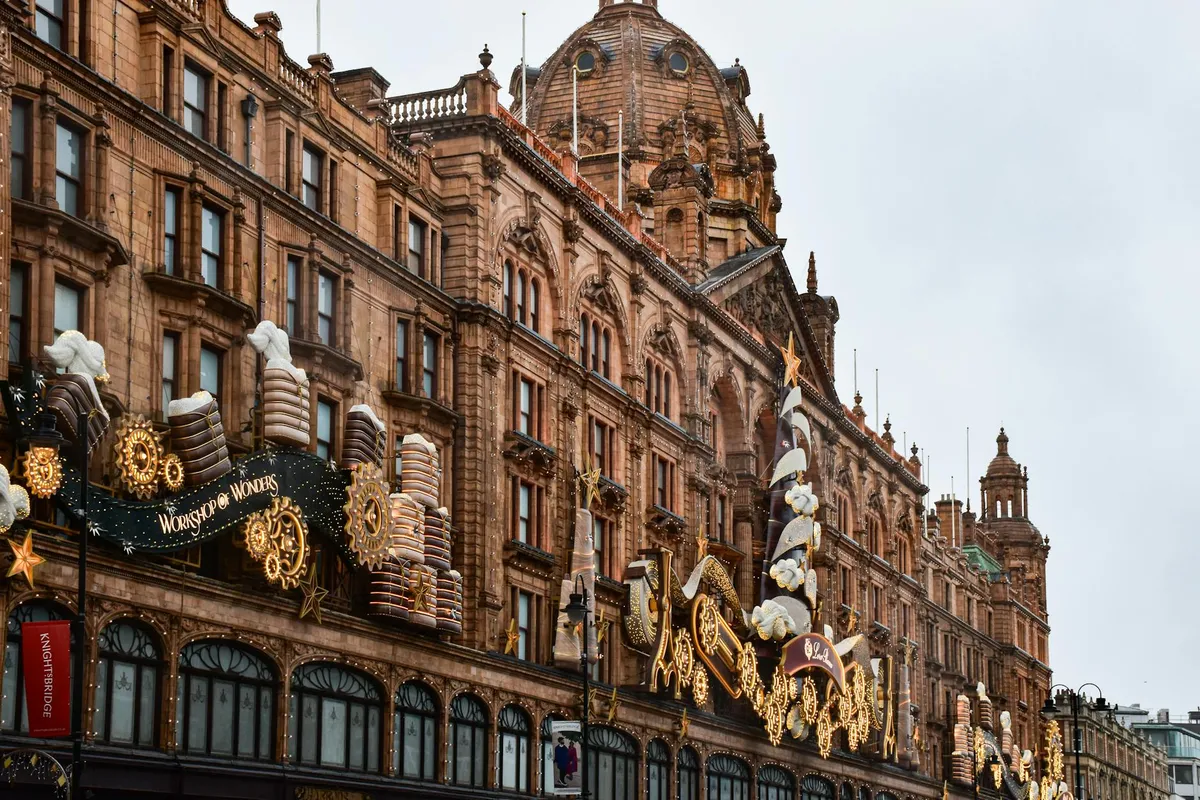
The department store is, in 2026, regarded as a familiar and somewhat dated retail format. It is also a comparatively recent commercial innovation — one whose origins, examined carefully, offer relevant context for current debates about retail formats, consumer behaviour, and the long-term trajectory of physical retail. The story is more particular than is often appreciated.
The pre-departmental landscape
Before the mid-19th century, retail commerce in most Western cities was organised around specialist establishments. A buyer seeking textiles visited a draper. A buyer seeking household goods visited an ironmonger. A buyer seeking clothing visited a tailor. Each transaction involved negotiation; prices were not generally fixed; the experience required sustained attention and considerable time.
This organisational structure had been remarkably stable for centuries. Specialist guilds had reinforced it. Customer relationships were personal and ongoing. The act of shopping was, for most goods, a multi-stop and time-intensive activity.
The Bon Marché and the formal innovation
The department store, as a coherent retail concept, is generally traced to the Bon Marché in Paris, which under the management of Aristide Boucicaut from 1852 onward introduced a set of practices that, together, constituted a new commercial form.
The practices were several, none entirely novel in isolation, but consequential in combination. Fixed prices, eliminating negotiation. A wide range of departments under a single roof. Free entry without obligation to purchase. The practice of returning unwanted goods. Regular advertised sales tied to seasonal cycles. Rigorous staff training in customer service. And the architectural commitment to large, well-lit, comfortable shopping spaces that elevated the act of shopping from errand to experience.
These innovations, individually adopted by various contemporary retailers, were systematised and elaborated upon at the Bon Marché in ways that produced an integrated retail concept fundamentally different from what preceded it.
Rapid international diffusion
The Bon Marché's commercial success, together with the broader social currents that supported it (urbanisation, rising disposable incomes among bourgeois households, the expansion of railway networks enabling longer-distance shopping), produced rapid international diffusion of the format.
By the 1870s, comparable establishments existed in London (Whiteleys), New York (R.H. Macy & Co. and A.T. Stewart), Berlin (KaDeWe predecessors), and most major European and North American cities. Each adapted the form to local circumstances, but the underlying concept remained recognisable across markets.
By 1900, the department store was the dominant urban retail format in most Western economies, with comparable establishments emerging in Asian and Latin American markets shortly thereafter.
The role of the customer
One element of the department store's success that bears particular emphasis is the explicit redefinition of the customer's role. In specialist retail, the customer was a participant in negotiation. In the department store, the customer was, in effect, an audience member at a curated commercial display.
This shift had consequences extending beyond commerce. The department store provided one of the few public spaces in 19th-century cities where unaccompanied women could comfortably spend extended periods. It contributed to changing patterns of urban leisure, of consumer culture, and of advertising as a discipline. Each of these effects in turn fed back into retail commerce, producing further evolution of the format.
The parallel with current retail dynamics
Examining this history offers context for current debates. The department store displaced an older retail order over a roughly 50-year period. It did so not by being marginally better than what preceded it, but by offering a fundamentally different shopping experience built on a different conception of the customer relationship.
Current retail dynamics — particularly the rise of e-commerce and the corresponding stress on physical formats — are sometimes framed as a battle between old and new. The historical record suggests a more nuanced framing. The department store itself was once "new" in the same sense, displacing what had been considered the natural order of retail commerce. Each successive retail format that has dominated has done so by reorganising the customer's relationship to commerce in ways the previous format could not match.
What this suggests
For commercial operators evaluating long-term retail strategy, the historical pattern suggests two principles worth bearing in mind.
First, retail formats persist not by virtue of their familiarity but by virtue of their continued ability to serve the customer relationships they were built on. Department stores persisted as long as they could offer a coherent and superior shopping experience; their decline began when alternative formats began offering different but compelling experiences.
Second, format transitions occur over longer periods than current commentary often suggests, but they do occur. The 50-year transition from specialist retail to department-store dominance may be paralleled by 30-50 year transitions involving currently emerging formats, with consequential strategic implications for operators positioning themselves over comparable time horizons.
Both principles suggest that the most useful strategic question is rarely "will physical retail survive?" — historically it has — but rather "what specific format and customer relationship will the next generation of dominant retailers offer?"